
Are We Still Overengineering Mobile Development?
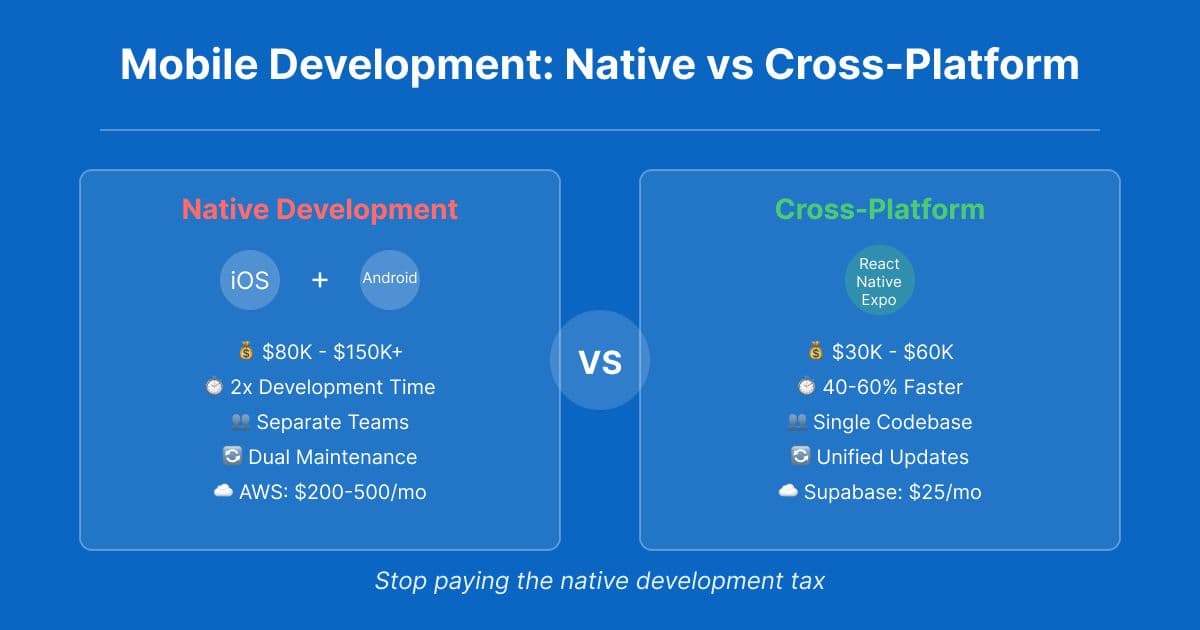

I'm working on a mobile app for a local non-profit using React Native, Expo, and Supabase. The velocity and cost-efficiency have me questioning something we often take for granted: when did separate native codebases become the default instead of the exception?
The traditional iOS (Swift) + Android (Kotlin) approach means:
- Doubling your mobile engineering headcount or accepting 2x timelines
- Maintaining feature parity across two codebases (spoiler: it never stays in sync)
- Coordinating dual release cycles and separate QA processes
- Typical 6-9 month delivery cycles
React Native + Expo delivers:
- Single codebase serving iOS, Android, and web simultaneously
- 40-60% reduction in development time, based on projects I've led
- 50-75% all-in cost reduction for comparable functionality
To be clear: high-performance gaming, AR/VR experiences, or apps requiring day-one access to OS-level APIs still benefit from native development. But that's maybe 5% of the mobile apps being built today. For the other 95%, internal tools, customer portals, MVP validation, even production SaaS apps, cross-platform frameworks have matured into production-grade solutions.
Let's Talk
If your team is evaluating mobile strategy or looking to accelerate delivery without sacrificing quality, I'd welcome the conversation. After 15+ years leading distributed engineering teams and optimizing for both speed and reliability, I've seen what works at scale.
#TechLeadership #MobileDevelopment #ProductStrategy #EngineeringLeadership #MobileAppDevelopment #OpenToWork #SoftwareEngineeringManager #EngineeringManagement #LeadershipInTech #BuildingHighPerformingTeams #EngineeringExcellence